Multiple Scattering Approximation for Image-Based Lighting#
VTK’s PBR renderer now applies a multiple scattering energy-compensation approximation when using image-based lighting (IBL). Previously, high-roughness metallic surfaces appeared artificially dark because single-scattering models lose energy at each bounce. The new approximation redistributes that lost energy, keeping surfaces physically plausible across the full roughness range.
Single Scattering IBL |
Multiple Scattering IBL |
|---|---|
|
|
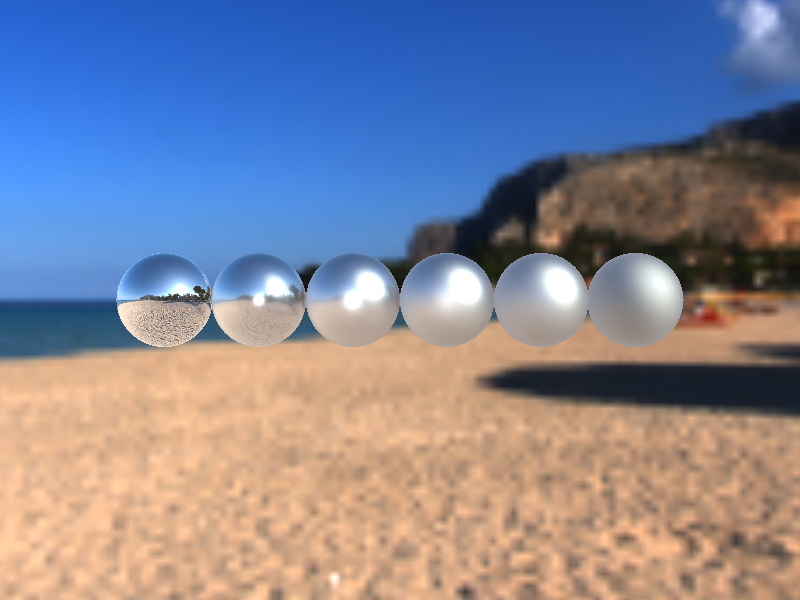
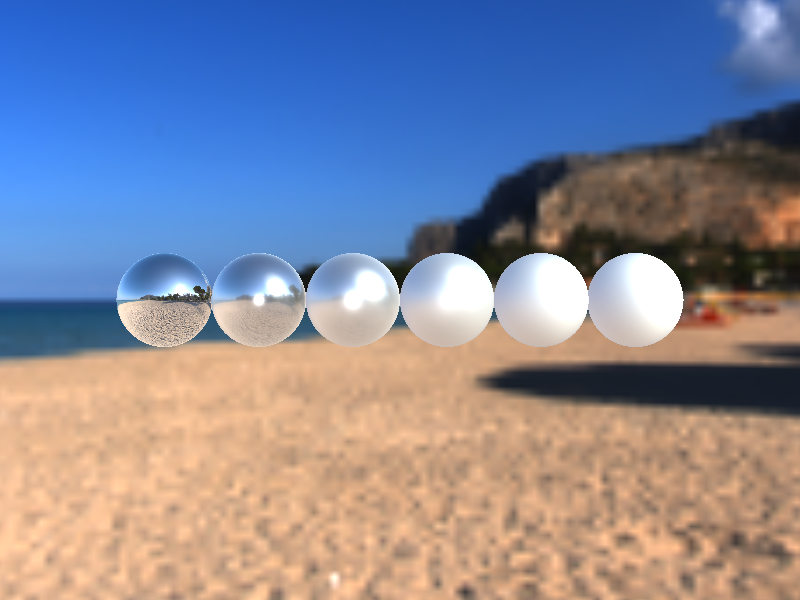
In the single-scattering case, increasing roughness causes metallic spheres to grow progressively darker — an energy-conservation artifact rather than a physically correct result. With the multiple scattering approximation enabled, roughness affects only the distribution of highlights; the overall brightness of the surface is preserved across all roughness values.
The new TestPBRMultipleScatteringIBL rendering test verifies this behavior by
rendering six fully metallic spheres with roughness values ranging from 0.0
to 1.0 under an HDR environment texture. The above images show the results
with single-scattering (left) and multiple-scattering (right) IBL, clearly
demonstrating the improvement in visual fidelity.